

PT6T Twin-Pac Support for Bell 212 and 412 Operators: What Makes It Different
Most operators come to us through the PT6A. Turboprops, single engines, familiar inspection intervals. The PT6T is a different animal, and operators who treat it like a PT6A with a second power section attached tend to learn that the expensive way.
The Twin-Pac is two PT6 power sections driving a single combining gearbox, feeding one output shaft. That architecture is what makes the Bell 212 and 412 what they are — genuine twin-engine capability with one transmission input — and it is also what makes maintenance planning on these aircraft its own discipline.
Here is how we approach it.
The Architecture, and Why It Changes Your Planning
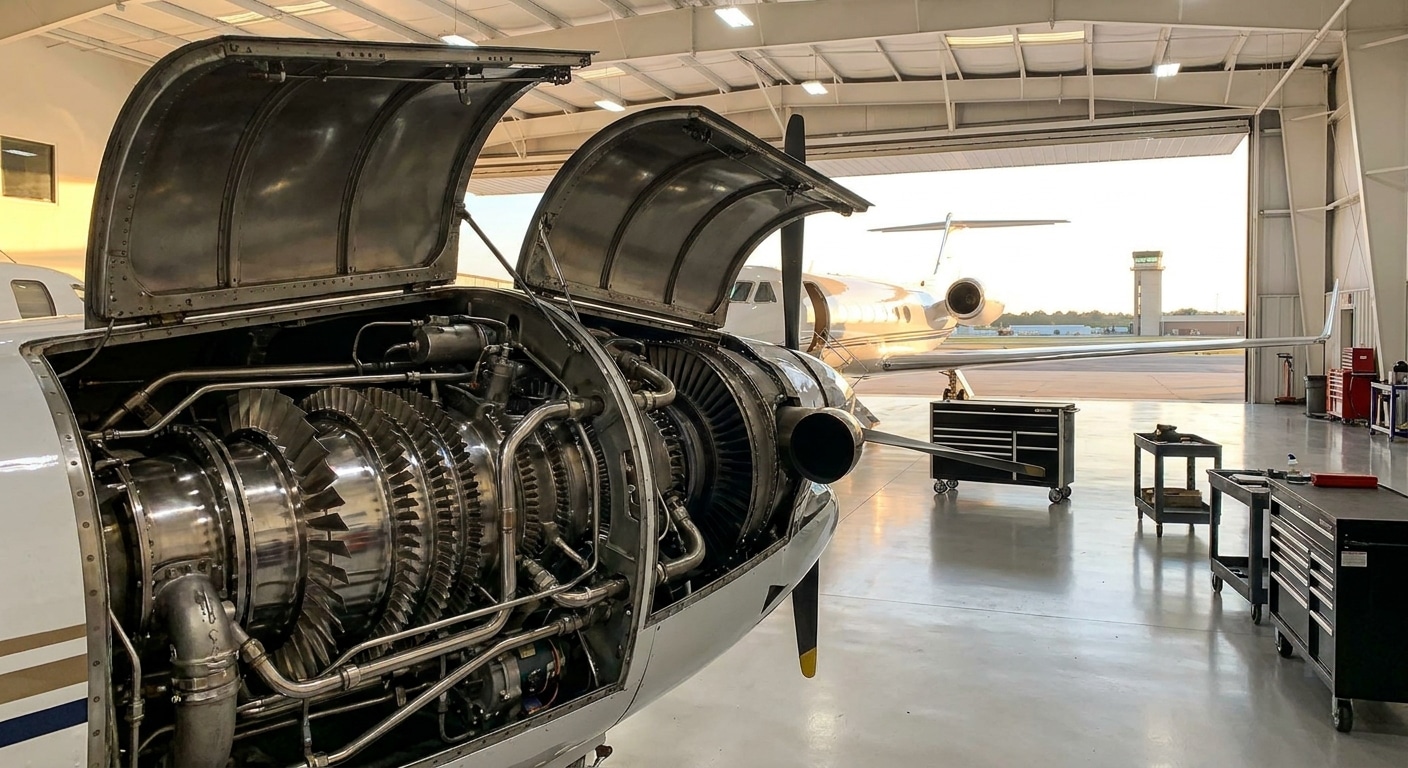
On a conventional twin, each engine is an independent unit with its own accessory drive and its own output. On a PT6T Twin-Pac, two power sections mount to a common combining gearbox. Torque from both sections is combined and delivered through a single output. Clutch and freewheeling units allow single-engine operation if one section is lost.
The practical consequences are significant:
The gearbox is a shared, life-limited asset. Power sections can be removed, overhauled and replaced somewhat independently. The reduction gearbox has its own overhaul cycle and its own accumulating time. Operators who plan around power section hours alone eventually get surprised by a gearbox that is due.
Power section time can drift apart. Once you have replaced one section and not the other, you are managing two different sets of accumulated hours and cycles against a common gearbox. Left unmanaged, that produces a schedule where something is always coming due and the aircraft is never available for a consolidated event.
Torque split matters diagnostically. An imbalance between sections is one of the earliest and most useful signals you get. Trend it.
What Actually Drives Cost on These Engines
Three things, in our experience, account for most of the unplanned spend on Twin-Pac fleets.
Hot section condition. Utility, EMS and offshore missions put these aircraft through frequent starts and high-cycle profiles, and cycles drive hot section deterioration more than hours do. A scheduled hot section inspection on a known interval is enormously cheaper than a hot section discovered by a chip light or a power loss.
Environment. Salt air, dust, brownout landings and marine operations are all normal duty for these airframes in the Caribbean and Latin America, and all of them accelerate compressor degradation and corrosion. Compressor wash discipline is not optional in these environments — it is the single highest-return maintenance habit available to an operator in this region.
Deferred small findings. A minor oil seepage, a slightly elevated vibration signature, a marginally out-of-limits torque split. Each of these is cheap to address early and expensive to address after it has propagated.
Borescope: The Highest-Value Hour You Will Spend
We say this about every PT6 variant and it is even more true here, because you have two power sections and one of them can be materially worse than the other without any obvious cockpit symptom.
A borescope inspection gives you direct visual condition of the hot section — combustion liner, turbine vanes, blade condition, cracking, coating loss — without a teardown. Run on both sections on a consistent interval, it converts maintenance from reactive to scheduled.
What we look for specifically on Twin-Pacs: asymmetric deterioration between sections, which usually points to an installation, fuel scheduling or bleed issue rather than to normal wear; and any indication that the two sections are aging at meaningfully different rates, which changes how you sequence the next event.
Pair it with vibration analysis and you have a genuinely complete picture of the engine’s condition without opening anything.
Parts: Availability Is the Real Constraint
Turbine parts availability has been the dominant operational variable for several years, and helicopter operators feel it acutely because the airframes tend to be mission-critical — EMS, law enforcement, offshore transport, utility. An aircraft on the ground is not an inconvenience, it is a contract problem.
We hold and source new, overhauled and serviceable Bell parts alongside our PT6 inventory, and we are an authorized distributor for Southwest Turbine and Extex Engineered Products. The reason that matters for a Twin-Pac operator is straightforward: when a finding comes out of a borescope, the question is never “what is wrong.” It is “how fast can the part be here.”
Operators should also stay current with applicable FAA airworthiness directives and manufacturer service bulletins — compliance planning is far cheaper when it is folded into a scheduled event rather than handled as a standalone grounding.
Field Service and AOG
Bell 212s and 412s do not always break somewhere convenient. Ours frequently do not.
Our technicians deploy globally, typically on site within 48 hours, for troubleshooting, borescope, rigging, component replacement and return-to-service support. A substantial share of what gets called an engine failure turns out to be fuel scheduling, rigging or an accessory — findings that are resolved in the field in days rather than weeks. That is the entire argument for getting a qualified set of eyes on the aircraft before committing to a removal.
For fleets, an engine management program puts trend monitoring, inspection scheduling, gearbox and power section time tracking, and parts planning into one place — which is how you stop having three separate maintenance events that could have been one.
Talk to a PT6 Specialist
We have worked on PT6 engines out of Miami since 1981, with a heavy Latin America and Caribbean customer base and bilingual support throughout. If you operate Bell 212s or 412s and want a second opinion on a finding, a borescope quote, or a parts availability check, we are straightforward to reach.
Request a quote or AOG support
JetSet Airmotive — 6065 NW 167th St #B21, Hialeah, FL 33015 — https://www.jsamiami.com